Sunday, July 24, 2022

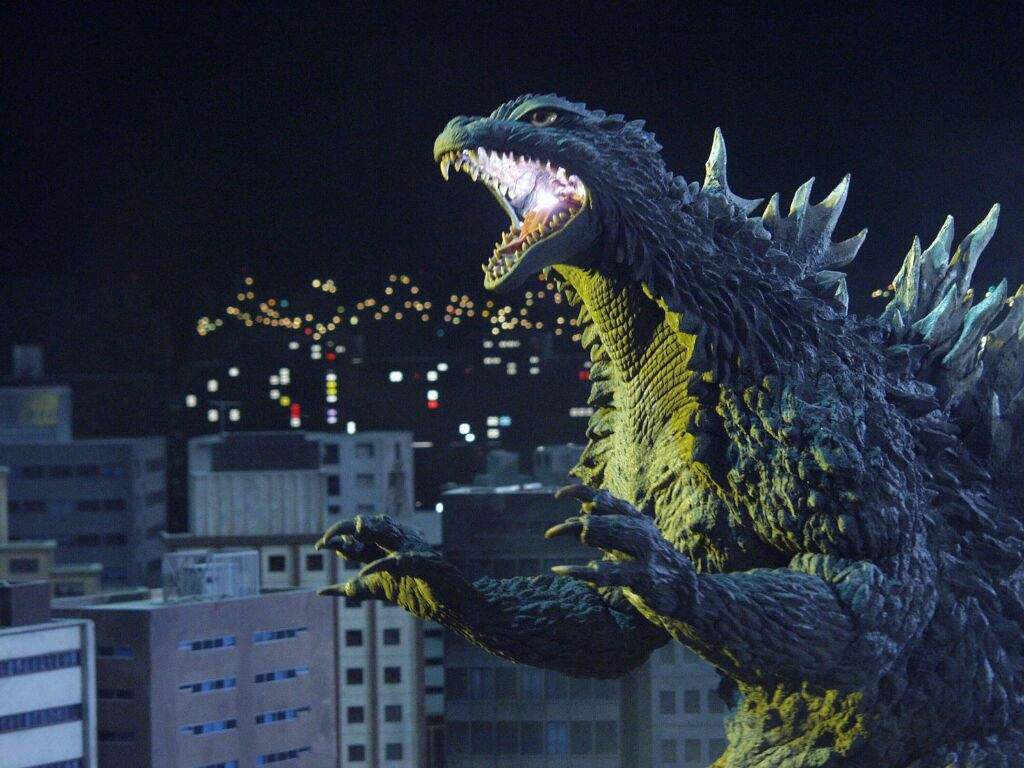
Godzilla Evolution Translation

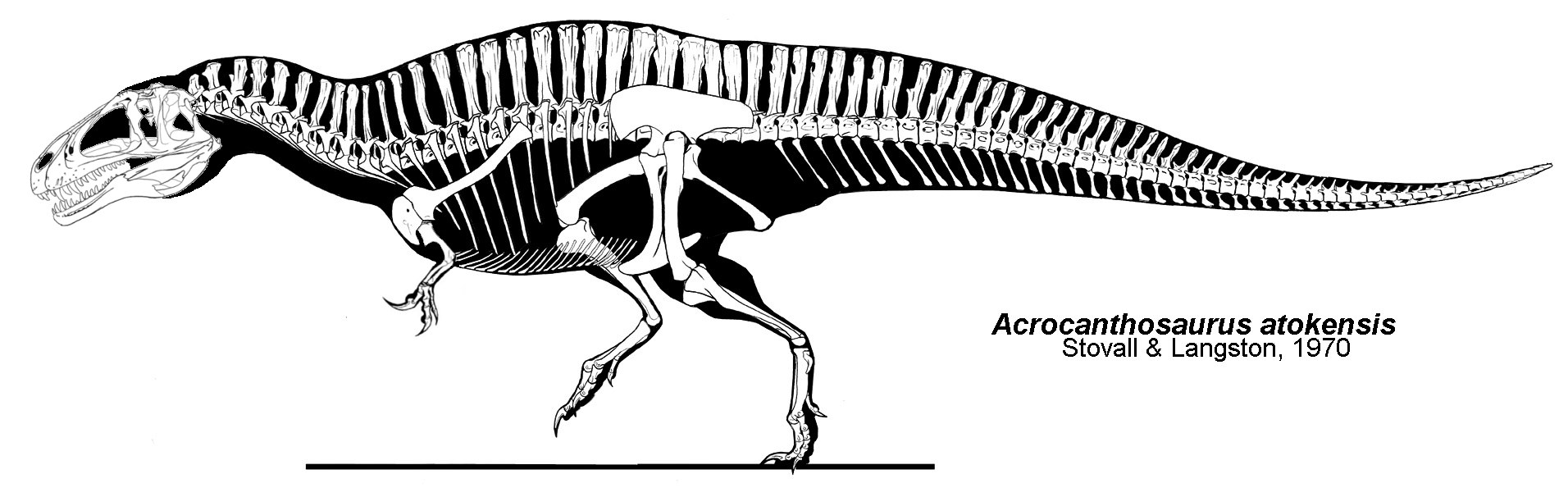
 Godzilla{2003} | Wiki | Godzilla AminoFile:Acrocanthosaurus atokensis.jpg - Wikimedia Commons

BIO:

    During the Paleogene, Acrocanthosaurus evolved into Gojirasaurus, a deadly ocean predator that arose after many generations adapting to their new marine environment. Usually on the hunt near the ocean’s surface, Acrocanthosaurus’ spines elongated to form sails to better navigate the world’s oceans. They developed extra sets of dorsal fins making them faster and more agile swimmers, and eventually, grew bones that protruded through their sail-like spines as defenses against rivals.
    Gojirasaurs also began swallowing radioactive rocks to aid in digestion and to fuel their colossal bodies. After meals, they would release excess radioactive heat from their dorsal fins to cool off. The nuclear heat even allowed the giant theropods to traverse environments with subfreezing temperatures.
    Gojirasaurus, however, weren’t the only giant fauna around in the Paleogene. Although Gojirasaurus were Earth’s most dominant predators, they were routinely challenged by Angilasaurus, Europe’s armored, terrestrial rulers. Their epic battles resulted in further adaptations to confront one another. Paleontologists believe that their eons-long rivalry resulted in Gojirasaurus utilizing its hands for combat to potentially flip and immobilize Angilasaurus.
     Millions of years later in the Neogene era, Gojirasaurus evolved into their current and most formidable form, Godzilla. After generations of swallowing radioactive rocks, Godzillas’ stomach changed chemically and physiologically, and thus now able to draw from the combustion in its stomach to produce its signature atomic breath. Unlike its earlier form, Gojirasaurus, Godzilla no longer had to release radioactive heat from its fins, now it could also fire it from its mouth for offense, creating an epic and awe-inspiring explosion. However, Godzilla only made use of this skill sparingly to avoid internal burns, making its true strength a mystery.
    Godzilla’s scales also evolved to be remarkably resilient and dense due to the species’ history of traversing the globe and fighting various - if not all - kaiju. This fact highlights the mystery of why Godzilla is the last of his kind. Paleontologists so far hypothesize some sort of cataclysmic event happened thousands of years ago, devastating the Godzilla population as well as others. Regardless of the circumstances, the supposed last Godzilla still reigns as top predator among Earth’s kaiju, leading to his famous title as “King of the Monsters”.

 Spanish: Biografía de Godzilla

    Durante el Paleógeno, el Acrocanthosaurus evolucionó hasta convertirse en el Gojirasaurus, un mortífero depredador oceánico que surgió tras muchas generaciones adaptándose a su nuevo entorno marino. Normalmente a la caza cerca de la superficie del océano, las espinas de los Acrocanthosaurus se alargaron para formar velas y navegar mejor por los océanos del mundo. Desarrollaron conjuntos adicionales de aletas dorsales que los hacían nadadores más rápidos y ágiles, y finalmente, les crecieron huesos que sobresalían a través de sus espinas en forma de vela como defensas contra sus rivales.
Los Gojirasaurios también empezaron a tragar rocas radiactivas para facilitar la digestión y alimentar sus colosales cuerpos. Después de comer, liberaban el exceso de calor radiactivo de sus aletas dorsales para refrescarse. El calor nuclear permitía incluso a los terópodos gigantes atravesar entornos con temperaturas bajo cero.
        Sin embargo, los Gojirasaurus no eran la única fauna gigante del Paleógeno. Aunque los Gojirasaurus eran los depredadores más dominantes de la tierra, se veían desafiados a menudo por los Angilasaurus, los gobernantes terrestres acorazados de Europa. Sus épicas batallas dieron lugar a nuevas adaptaciones para enfrentarse entre sí. Los paleontólogos creen que su rivalidad, que duró un largo periodo de tiempo, dio lugar a que el Gojirasaurus utilizara sus manos para el combate con el fin de voltear e inmovilizar al Angilasaurus.
        Millones de años más tarde, en el Neógeno, el Gojirasaurus evolucionó a su forma actual y más formidable, la cual es Godzilla. Tras generaciones de tragar rocas radiactivas, el estómago de Godzilla cambió química y fisiológicamente, por lo que ahora es capaz de aprovechar la combustión de su estómago para producir su característico aliento atómico. A diferencia de su forma anterior, el Gojirasaurus, Godzilla ya no tenía que liberar calor radiactivo de sus aletas, ahora también podía dispararlo desde su boca para ofender, creando una explosión épica e impresionante. Sin embargo, Godzilla sólo utilizaba esta habilidad con moderación para evitar quemaduras internas, por lo que su verdadera fuerza y poder es un misterio.
        Las escamas de Godzilla también evolucionaron para ser notablemente resistentes y densas debido a la historia de la especie de atravesar el globo y luchar contra varios -si no todo- kaiju. Este hecho pone de manifiesto el misterio de por qué Godzilla es el último de su especie. Hasta ahora, los paleontólogos plantean la hipótesis de que algún tipo de cataclismo ocurrió hace miles de años, devastando a la población de Godzilla y a otras. Independientemente de las circunstancias, el supuesto último Godzilla sigue reinando como máximo depredador entre los kaiju de la tierra, lo que le ha llevado a su famoso título de "Rey de los Monstruos".

Japanese:

ゴジラ伝記:

古第三紀、アクロカントサウルスは、何世代も経て、新しい海洋環境に適応する恐ろしい海洋捕食者ゴジラサウルスに進化した。普段は海面近くで狩りをしているアクロカントサウルスは、世界中の海をより上手く航海するため、背骨を帆の形となるように、引き延ばした。さらには、背びれを発達させ、より速く、より機敏に泳ぐようになり、やがて帆のような背中から骨が突き出るようになり、敵から身を守るようになったのである。

また、ゴジラザウルスは、消化を助け、その巨体のエネルギー補給のため、放射性岩石を飲み込むようになった。食後は背びれから余分な放射熱を放出し、体を冷やした。この放射熱のおかげで、巨大な獣脚類は氷点下の環境でも移動することができたのだ。

しかし、古第三紀に生息していた巨大生物はゴジラザウルスだけではなかった。ゴジラザウルスは地球上で最も優勢な捕食者であったが、欧州の鎧をまとった地上の支配者であるアンジラサウルスに絶えず脅かされていたのである。彼らの壮絶な戦いは、互いに対抗するためにさらなる進化をもたらした。その結果、古生物学者によると、ゴジラサウルスは両手を戦闘に使用するようになり、アンジラサウルスを投げ飛ばし、動けなくすることができるようになったのである。

数百万年後の新第三紀に、ゴジラザウルスは現在の最も恐ろしい姿であるゴジラに進化した。何世代にもわたって放射性物質を含んだ岩石を飲み込んできたゴジラの胃は、化学的、生理的に変化し、その結果、胃の中の燃焼を利用して、特有のアトミックブレスを作り出すことができるようになったのである。以前のゴジラザウルスとは異なり、ヒレから放射熱を放出する必要がなくなり、口から放射熱を発射して攻撃できるようになり、大規模で驚異的な爆発を起こすことができるようになった。しかし、この能力は体内の火傷を避けるために控えめにしか使わず、その実力は謎に包まれている。

また、ゴジラのウロコは、地球上を渡り歩き、様々な怪獣と戦う中で、著しく弾力的で頑丈なものに進化した。この事実が、なぜゴジラが最後の種なのかという謎を解き明かしている。古生物学者のこれまでの仮説では、数千年前になんらかの天変地異が起こり、ゴジラだけでなく他種も壊滅的な打撃を受けたとされている。いずれにしても、最後の種とされるゴジラは地球上の怪獣の頂点に君臨しており、「怪獣王」の称号を持つにふさわしい。

Saturday, July 23, 2022

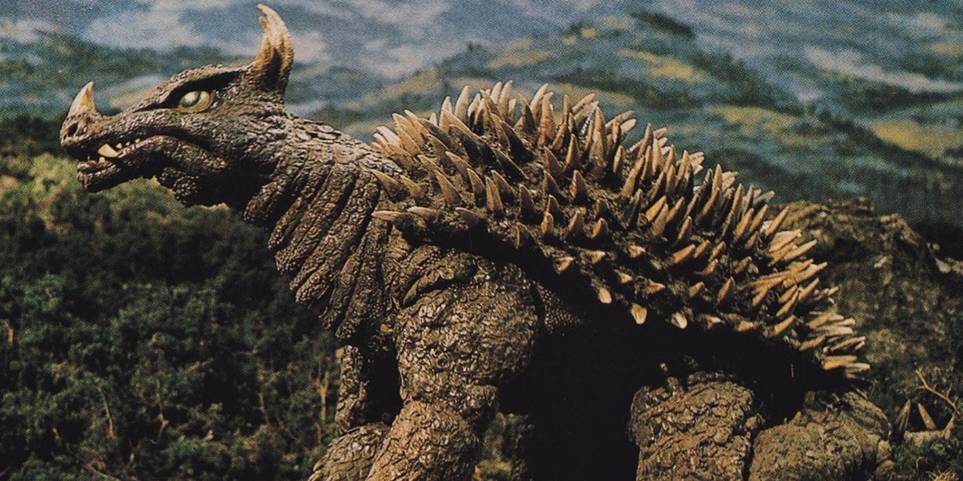
Anguirus Evolution Translation

Godzilla: All 12 Monster Allies (& Which Movies They Appeared In) Polacanthus, an armoured dinosaur from the Isle of Wight - DinoWight

 BIO:

     At the start of the Paleogene era, resources were scarce so the herbivorous Polacanthus evolved into the omnivorous Angilasaurus. To accommodate its new diet, Angilasaurus grew sharp teeth in order to tear and break down flesh and bone. Its carapace also became more flexible, allowing Angilasaurus to roll up into a defensive ball for protection and to move around. After generations of taking on this defensive stance, the original spikes on its back smoothed out and shortened to accommodate its new way of maneuvering around its environment.
    The tail also lost a considerable amount of osteoderms, adding to its flexibility when in the ball pose. Even with these changes, Angilasaurus’ tail remained a formidable defense against predators. The remaining osteoderms on the tail became light weight and thagomizer-like, creating the perfect weapon for close combat.
    Fossil evidence shows that Angilasaurus rivaled Gojirasaurus throughout their history. Although they were the rulers of Europe in their heyday, they were periodically threatened by the amphibious rulers of the time. Paleontologists believe this eons long rivalry was the catalyst for Angilasaurus evolving its flexible carapace to avoid potentially being flipped over by Gojirasaurus.
    In the Neogene era, Angilasaurus evolved into Anguirus with new traits such as a diamond-hard but flexible carapace. Like its distant relatives the Ankylosaurids, Anguirus went through convergent evolution to form a club that offered protection against potential predators like Godzilla. The adults have spiked clubs that can penetrate Godzilla’s hide and also launch regenerable barbs.
    Used as a last resort, Anguirus has the ability to open up the carapace and inhale more air into the lungs for a sonic roar attack. Anguirus’ sonic roar and remarkable endurance in combat comes from its giant lungs used to wear down prey and enemies in drawn out slug matches. Unfortunately all but one of the species perished thousands of years ago in what some paleontologists hypothesize to be some form of severe thunderstorms. Regardless, in the modern day, the tenacious Anguirus is recognized as the “Armored Brute”.

 Spanish: Biografía de Anguirus

    Al principio de la era Paleógena, los recursos eran escasos, por lo que el Polacanthus herbívoro evolucionó al Angilasaurus omnívoro. Para adaptarse a su nueva dieta, el Angilasaurus desarrolló dientes afilados para desgarrar carne y quebrar huesos. Su caparazón también se hizo más flexible, lo que permitió al Angilasaurus enrollarse en una bola defensiva para protegerse y desplazarse. Tras generaciones de adoptar esta postura defensiva, las púas originales de su espalda se suavizaron y acortaron para adaptarse a su nueva forma de maniobrar en su medio ambiente.
        La cola también ha perdido una cantidad considerable de osteodermos, lo que aumenta su flexibilidad cuando adopta la postura de bola. Incluso con estos cambios, la cola del Angilasaurus seguía siendo una formidable defensa contra los depredadores. Los osteodermos que quedaban en la cola se volvieron ligeros y con forma de thagomizer, creando el arma perfecta para el combate de cuerpo a cuerpo.
        Las pruebas fósiles muestran que el Angilasaurus rivalizó con el Gojirasaurus a lo largo de su historia. Aunque fueron los gobernantes de Europa en su época de esplendor, periódicamente se veían amenazados por los gobernantes anfibios de la época. Los paleontólogos creen que esta rivalidad de siglos fue el catalizador para que el Angilasaurus evolucionara su caparazón flexible para evitar ser potencialmente volteado por el Gojirasaurus.
        En el Neógeno, el Angilasaurus evolucionó hasta convertirse en Anguirus, con nuevos rasgos como un caparazón duro como el diamante pero flexible. Al igual que sus parientes lejanos los Anquilosaurios, Anguirus pasó por una evolución convergente para formar un garrote que ofrecía protección contra posibles depredadores como Godzilla. Los adultos tienen garrotes con púas que pueden penetrar la piel de Godzilla y también lanzan púas regenerables.
        Utilizado como último recurso, Anguirus tiene la capacidad de abrir el caparazón e inhalar más aire en los pulmones para un ataque de rugido sónico. El rugido sónico de Anguirus y su notable resistencia en combate se deben a sus gigantescos pulmones, que utilizan para desgastar a sus presas y enemigos en prolongados combates. Desgraciadamente, todas las especies, excepto una, perecieron hace miles de años en lo que algunos paleontólogos suponen que fue alguna forma de tormentas eléctricas muy severas. Independientemente de eso, en la actualidad, el tenaz Anguirus es reconocido como el "Bruto Armado".

Japanese:

アンギラス伝記:

古第三紀初期、資源が乏しく、草食のポラカンサスは雑食のアンジラサウルスに進化した。アンギラサウルスは新しい食事に対応するため、肉や骨を引き裂き分解するための鋭い歯を生やすようになった。また、甲羅はより柔軟になり、アンジラサウルスは身を守るため、丸まって移動することができるようになった。何世代にもわたってこのような防御体制をとり続けた結果、背中のトゲは滑らかになり、短くなり、新しい環境に適応するようになった。

        また、尻尾は骨芽細胞を著しく失い、体を丸めて防御姿勢をとった時の柔軟性が高まった。このような変化があっても、アンジラサウルスの尾は捕食者に対する強力な防御手段であることに変わりはなかった。尾に残った骨芽細胞は軽量化され、タゴマイザーのようになり、近距離での戦闘に最適な武器となったのである。

アンジラサウルスは、その歴史を通じてゴジラサウルスに匹敵する存在であったことが、化石から明らかになっている。全盛期にはヨーロッパの支配者であったが、当時の水陸両用の支配者に定期的に脅かされていたのである。この幾年にもわたるライバル関係がきっかけとなって、アンジラサウルスがゴジラサウルスにひっくり返される可能性を避けるために、柔軟な甲羅を進化させたと、古生物学者は考えている。

新第三紀には、アンギラサウルスはダイヤモンドのように硬くも柔軟な甲羅を持つアンギラスに進化した。アンギラスは、遠縁のアンキロサウルス類と同様に収斂進化を経て、ゴジラのような脅威となる捕食者から身を守るための棍棒を形成するようになった。成体のアンギラスは、ゴジラの皮膚を貫通できるトゲのある棍棒を持ち、再生可能なトゲを放つこともできた。

最後の手段として、甲羅を開いて肺に空気を取り込み、ソニックローア攻撃を行うことができる。アンギラスのソニックローア攻撃と戦闘における驚異的な耐久性は、獲物や敵を消耗させ長時間にわたる戦闘を行うために使用される、その巨大な肺に由来する。残念ながら、古生物学者によると、一種を除くすべての種が数千年前に激しい雷雨のようなもので滅んでしまったそうだ。しかし、現代では、この粘り強いアンギラスは、「アーマード・ブルート 」として認識されている。

Sunday, February 21, 2021

Amazing Dinoworld: World of the Sea Monsters


 Synopsis: This episode of Amazing Dinoworld features a mother Mosasaur and other marine reptiles that swam in the oceans of the Cretaceous period.
Viewed on: HBO Max (Also available on CuriousityStream)
 

    The second episode of Amazing Dinoworld is World of the Sea Monsters. Starting right off with a bang, the episode begins with a Spinosaurus locked in a titanic battle with a giant marine reptile. Good way to get my attention. After the opening sequence, the second half of Amazing Dinoworld focuses mainly on the story of a mother Mosasaurus, the 13 meter long ruler of the Cretaceous oceans.

    World of the Sea Monsters really dives deep into the evolutionary history and remarkable rise of the Mosasaurs. The speed of the rise of the Mosasaur is quite unprecedented in the history of life. Their ancestors, the Protomosasaurus, evolved into the dominant oceanic predators of the Late Cretaceous in a span of around 20 million years which is fast for geologic time. The Protomosasaurus was a monitor lizard like creature closely related to snakes and other lizards. Like snakes Protomosasaurus (and Mosasaurs) can even open their jaws wide for gulping down food. 

    During the entire Amazing Dinoworld series, there are several interviews with paleontologists discussing their theories on animal behavior and I found the the Mosasaur behaviors the most fascinating. A paleontologist at the Natural History Museum of Los Angeles shows us that fossil evidence implies that Mosasaurs had close parent-baby bonds. This type of bond is advantageous to all vertebrates, which helps showcase how Mosasaurs were so successful. 

    Just like The Feathered Revolution episode, World of the Sea Monsters delivers impeccable animation that really gives life to these amazing animals. Unfortunately, also like The Feathered Revolution, there can be melodramatic moments but I found those scenes in this half of the series a little less cheesy. Plus the creature fights were entertaining as hell to watch. World of the Sea Monsters and Amazing Dinoworld as a whole is just an awesome watch for dinosaur fans of any age. This series convinced to sign up for CuriousityStream haha.

 
My Score: Tyrannosaurs Recs

Amazing Dinoworld: The Feathered Revolution


Synopsis: We follow the life and adventures of dinosaurs like Deinocherus and Troodon as they grow and survive in a prehistoric world.
Viewed on: HBO Max (Also available on CuriousityStream)

    Apparently to my surprise, HBO Max has a two part documentary series on their platform called Amazing Dinoworld. This series is a japanese-american co-production by CuriousityStream with state of the art CGI that really took my back to those days of watching Walking with Dinosaurs on television. Although this series can overextend its reach about the science, it is nonetheless a fun thrill ride. Compared to other dinosaur documentaries that have come out in the past few years, Amazing Dinoworld makes it mark and stands out as one the new great dinosaur documentaries. 

    The first half of this series is called The Feathered Revolution which takes us through the lives of two feathered dinosaurs, Deinocheirus and Troodon, and how feathers possibly influenced their evolutionary histories. Deinocheirus (means horrible hand) is an omnivorous dinosaur with giant claws, and I was actually very intrigued by the new science of this animal. Fossils out of Mongolia show this creature is a T-rex sized animal that used its claws for finding food and for defense against predators like Tarbosaurus. Other fossils show a strong parental instinct was present in Deinocheirus based on sophisticated nests that became fossilized. 

    The other part of the episode focus on a mother Troodon. The story takes a drastic shift in locality because now we are in the Arctic. Its very interesting to see dinosaurs in snow since most people don't know they can adapt pretty well to the cold. Scientist begin to explain here that feathers probably influence certain evolutionary traits. For example, feathers kept dinosaurs warm which is believed to of helped Troodon fuel its big brain. Troodon has the biggest brain relative to body size amongst dinosaurs. Both Troodon's and Deinocheirus' feathers probably helped them incubate their eggs and allowed the animals to better nurture their young.

    The only negatives I noticed were the melodramatic story elements. I understand this is for the purposes of entertainment, but when a dinosaur documentary tries to pull at your heart strings like a Pixar movie would, it's just a little out of place for a speculative nature documentary. Now lets forget about all the science and the melodramatic story stuff, and just look at the CGI. The animation in this series in incredible, top notch! Honestly, Amazing Dinoworld has the best CGI of any dino doc of seen recently. Even amongst all the special limited engagement museum imax theaters, this documentary ranks up their in terms of visual quality. This viewing would be best seen on a big screen. If you want an updated Walking with Dinosaurs with scientifically accurate (but not perfect) dinos and reptiles, with CGI that that doesn't lag far behind Jurassic World, then this series if for you.


My Score: Tyrannosaurs Recs

Sunday, November 10, 2019

Dinosaurs: Giants of Patagonia


Synopsis: We follow in the footsteps of a Giganatosaurus and Argentinasaurus as they grow up in a desolate prehistoric world of predator and prey.
Viewed on: Dailymotion

I initially saw this in a theater at a science museum and it a a fun time especially because it was in 3D, not a fan most of the time but on that occasion is was well done. The narrator is Donald Sutherland and his voice lends a friendly yet regal delivery of the spoken science material. I especially loved the beginning when he narrates the timeline of our galaxy and how vast time on Earth really is. The visual guide showing me what he's talking really made me comprehend how far back deep time is. After that the next thing that will probably pop out for audiences is the cinematography. This film was shot for IMAX screens I presume so you can tell that a lot of shots were set up to be beautifully captured like waterfalls or the fossilized footprints in a quarry. Id say if you can watch this movie on big 4K TV you could really appreciate the the gorgeous cinematography of the Argentina badlands.

The story we follow is that of a Argentinasaurus and a Giganatosaurus. Technically the movie describes them later as a more distinct sub species but I'm just going to refer them as Argentinasaurus and Giganatosaurus. The Argentinasaurus story is kind of a "been there, done that" scenario. Typical sauropod story where the dinosaur must avoid being eaten and grow up fast enough to never be considered dinner again. The Giganatosaurus was more entertaining especially when they were hunting.

The animation effects were CG models superimposed on a real background so it is reminiscent of Walking with Dinosaurs if any readers is familiar with that series. The character models were for okay looking for a science feature, but still way better animated than the ones in March of the Dinosaurs. The real star of the show here are the grandiose wide shots of the natural background especially the ones with dinosaurs.

I wouldn't say that a typical dinosaur fan would learn all that much if that aren't familiar with the title dinosaurs already so be aware of that fact. The selling point here is the big screen replayability for anyone has a home theater at home. I'd say this dinosaur feature is worth a view if you haven't seen this one yet but for repeat viewings, watch on a high definition device and kickback with a brew.

My Score: Tyrannosaurs Recs


Sunday, November 3, 2019

March of the Dinosaurs


Synopsis: This fully animated feature highlights the struggles certain dinosaurs go through during the winter months of northwest Canada and southwest USA.
Viewed on: Youtube

March of the dinosaurs was a nice surprise. I've seen trailers for this and it honestly didn't look too good and the animations were rough so I thought it was mostly aimed for kids. I was somewhat right, the fully computer generated feature was uncanny to watch after a while. The story takes place in northwest Canada (inside the Arctic Circle at the time) and mostly centers on two distinct characters. We have a young Edmontosaurus, Scar, and a young Troodon named Patch. Scar's story features him trekking a 1000-mile autumn migration with various hazards like thin ice and predators while Patch is shown having to stay and endure the Arctic winter.

Like I said, the animation is rough (think Beast Wars from the 90's) so stuff like shadows and fully detailed features on feathers and scales are hard to pin point. But I'll say this, if this animation is enough to stop you from enjoying the story then just skip it. But if you love dinosaurs and can overlook a glaring distraction like animation style then I'd say there's some fun to be had with this feature.

The story of Scar is riveting. So much so that now I'm interested in learning a little more about hadrosaurs which is a dinosaur genus Edmontosaurus are part of. As a young herbivorous dinosaur, his journey seemed more perilous at times. From his avoidance of predators like Albertosaurus to heartbreaking scenes of betrayal from one of own due to a brain tumor, I found myself moved many times due to my investment in this little dinosaur's journey.

Patch's story was almost as good but still fun to see his journey. The scenes with the Troodon sharing the screen with a Gorgosaurus are probably the most entertaining this part of the feature gets. The thing I really appreciate most from Patch's story was how close the movie tries to get to what the real creatures probably looked like. This movie is based on the latest dinosaur research so they incorporate feathers on the therapod dinosaurs which is something a lot of people might see for the first time. I really like how the animators were able to make the carnivorous dinosaurs relatable yet scary with plumage.

March of the Dinosaurs was a surprise for me. Go into this movie with zero expectations, a open mind and you will have a good time. Like I said before if the animation is not for you then skip it because it can admittedly be distracting. But if that doesn't deter you then I'd say this feature is a worth a watch. When a movie makes you appreciate a hadrosaur, arguably the cow of the dinosaur world, I'd say check it out.

My Score: Tyrannosaurus Recs

Saturday, November 2, 2019

Top 10 Biggest Beasts Ever


Synopsis: The documentary counts down the top ten biggest beasts in Earth's history from prominent animal groups.
Viewed on: Youtube

Here we have another program put out by National Geographic. They keep delivering the goods in terms of entertainment.and man did this one deliver. I'm a sucker for top ten lists, so this doc was a must watch for myself. The basic premise of the doc is that besides the obvious countdown element, the creatures involved would be the biggest icons of their species or animal family tree. The reason being is if we had just the biggest animals ever, they would all probably just be whales. Another disclaimer for the terms of the "biggest" beast, the contest will be determined by measuring length.

If you're looking for a doc that's thoroughly entertaining this is it. The animation effects were fantastic. They was a fair bit of them and varied. This doc being a top ten list allows itself to be stacked with multiple scientist interviews with showcasing of some fossils which is always great to see. There was even a scene where a scientist goes out to the field to show you where baby Megalodon teeth are found in Panama. Its also very refreshing to see the list go through giant animals of different species like mammals, insects, reptiles and so on which kept the program engaging enough to stay watching.

There is also much here in terms of education. Every creature on the top ten brings up an interesting question regarding how they got so big, ate, moved, or how they attacked prey. For example, with the Griffinfly, a prehistoric giant insect, the question of how it got so big was solved by researchers because they were able to determine that the Earth was much warmer back then and contained different amounts of oxygen. These scenes help teach fundamental aspects to why these creatures got so big.

Now focusing on the bad, there really isn't all that much to say. Some of the animation scenes, like the Titanoboa segment, are recycled from other docs which I didn't like but this top ten documentary was able to add additional educational content that those other docs didn't have so I'll let it slide. Besides that this is a long doc, and about an hour and half is a serious investment of watching for a popular science doc. As I love this subject matter, the running time didn't bother me but I can say that a few scenes seem to drag after a while and it could bore the average viewer.

I really couldn't go into much more detail in this review without spoiling the countdown. But as I already mentioned there's plenty of entertainment value is this program so check it out.

My Score: Tyrannosaurus Recs